
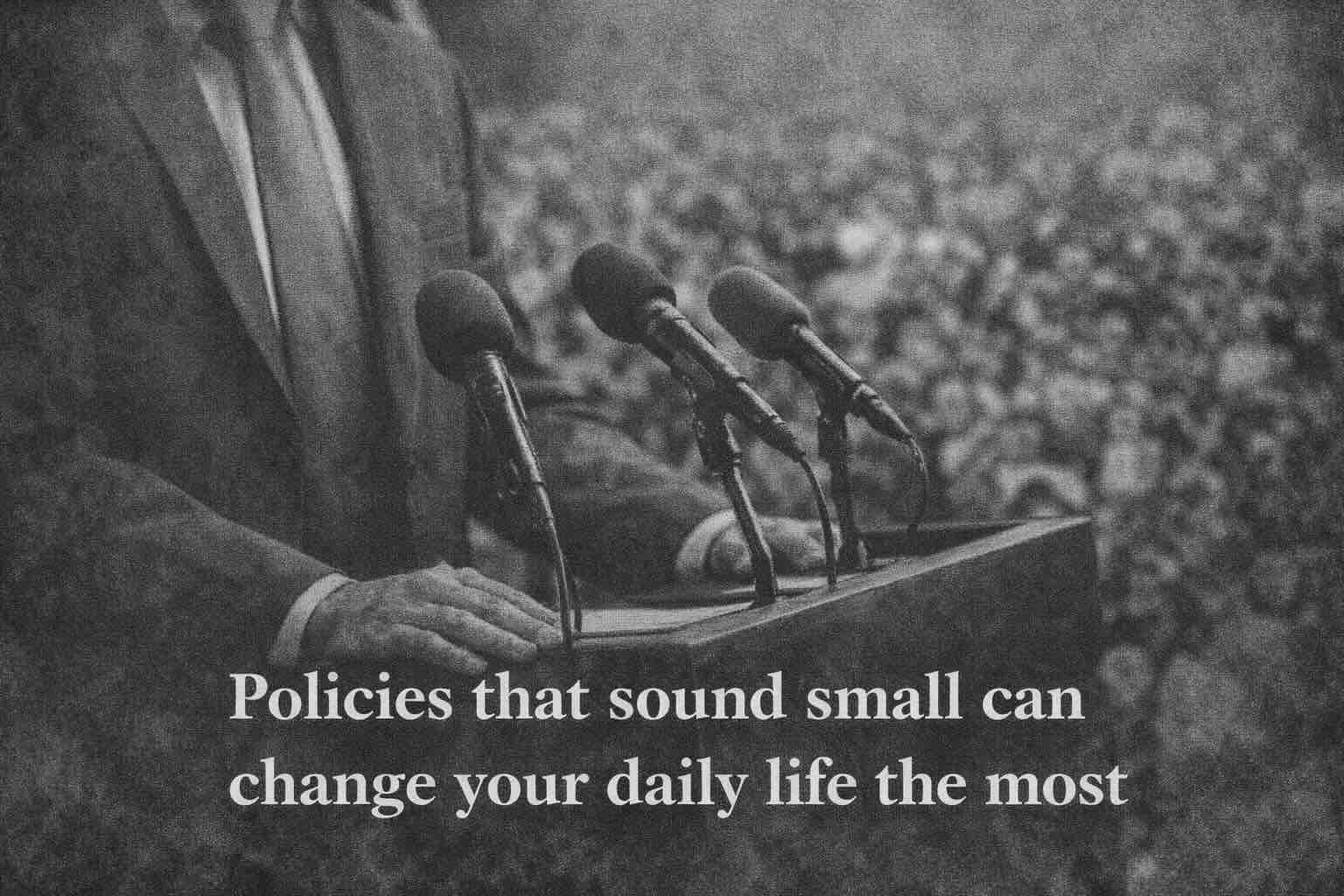
Most people think politics happens in speeches.
In reality, politics happens in the quiet parts: the rules, the budgets, the enforcement, the forms you fill out, the timelines you wait through, the services that suddenly stop working, or the new rules that show up after the press release has disappeared.
The biggest changes to daily life are often not dramatic. They are administrative.
Why “small” policies hit hardest
A headline policy makes the news. A minor regulation changes how you live.
Think of areas like:
- housing rules and planning decisions
- transport funding and route changes
- consumer protection and complaint handling
- education standards and fees
- local authority budgets and service cuts
- healthcare waiting list management and access
- immigration paperwork and eligibility rules
These are not always “debate” topics. They are operational choices. But they decide what is available to people in the real world.
The four questions that reveal the truth
Whenever you hear a policy announcement, ask four questions:
- What changes in practice? Not “what is the aim?” but what actually changes tomorrow, next month, next year.
- Who benefits? A policy can help some people while quietly hurting others. That is not always malicious. It is often a trade-off.
- Who pays? Is it taxpayers, consumers, local councils, businesses, or a specific group through hidden costs?
- How will it be enforced? A rule without enforcement is a statement. Enforcement is where outcomes are decided.
Why politics feels exhausting (and how to fix it)
Politics becomes unbearable when it turns into identity.
People stop discussing outcomes and start defending teams. That is why many smart people disengage. But disengaging does not protect you from the consequences.
The healthier middle path is “practical citizenship”:
- understand the changes that affect your work and home
- track the policies that touch your finances and rights
- ignore the drama designed for clicks
Our approach here
This section is built for normal people, not political insiders.
We will focus on:
- clear explanations in plain language
- what it means for real households
- where the trade-offs are
- what to watch next
- links to primary sources when possible
We will also correct ourselves publicly when we get something wrong. Trust is built through transparency.
This week’s theme: follow the incentives
Most political behaviour is not mysterious. It is incentive-driven:
- election cycles
- budgets
- lobbying
- bureaucracy
- public pressure
- institutional risk avoidance
When you follow incentives, the world becomes easier to understand.
Next step: If you want to pitch a topic, send: the policy name, your question, and what you have noticed in real life (higher bills, delayed services, confusion in paperwork). That is often where the real story starts.
Leave a Reply