
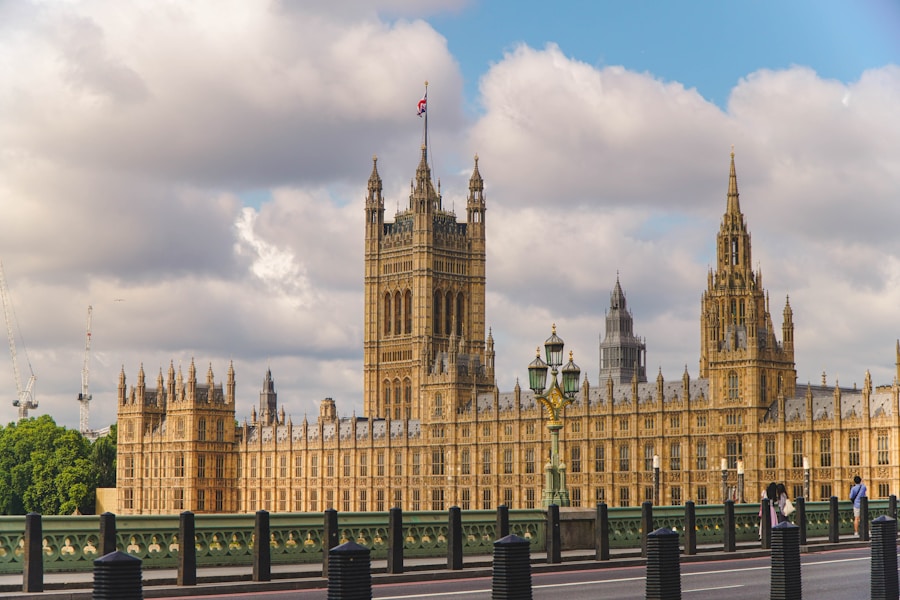
As a reader interested in the machinations of British governance, understanding the parliamentary agenda is crucial. This article offers a concise overview of key debates, legislative movements, and select committee activities scheduled for the upcoming week in the UK Parliament. It serves as a navigational tool, helping you discern the trajectory of national policy and the issues that will occupy the attention of your elected representatives.
Legislative Debates and Voting
The legislative pipeline is a constant flow, with various Bills at different stages. This week presents several opportunities for detailed scrutiny and potential amendment, forming the backbone of the House of Commons’ daily business.
Second Readings: Setting the Direction
Several Bills are scheduled for their Second Reading. This stage is a pivotal point where the fundamental principles of a Bill are debated. Members of Parliament (MPs) will discuss the merits and drawbacks of the proposed legislation, and a vote will be taken to determine if the Bill progresses further. A second reading vote indicates whether the House supports the general thrust of the Bill; it is rare for a government Bill to be defeated at this stage, but the debate can illuminate significant areas of contention.
For instance, the Online Safety (Amendment) Bill is expected to undergo its Second Reading. This Bill seeks to address perceived shortcomings in the existing online safety framework, particularly concerning age verification and content moderation for harmful materials. Expect a spirited debate as MPs grapple with balancing free speech, user privacy, and the imperative to protect vulnerable individuals online. The complexities involved are akin to threading a needle through a labyrinth.
Another Bill slated for Second Reading is the Social Care Funding (Reform) Bill. This legislation proposes changes to how social care services are funded across England. Discussions are likely to focus on the long-term sustainability of the proposed model, its impact on local authorities, and the fairness of the burden placed on individuals. The financial implications of this Bill are substantial, and the debate will serve as a barometer of the Government’s commitment to reforming a perpetually under-resourced sector.
Committee Stage: The Fine-Tuning Process
Following a successful Second Reading, Bills typically move to the Committee Stage. Here, a Public Bill Committee scrutinises the Bill clause by clause, often proposing amendments. This is where the minutiae are examined, and the Bill takes its final shape before returning to the full House.
This week, the Energy Security and Net Zero Bill is expected to continue its Committee Stage. This comprehensive piece of legislation aims to accelerate the transition to a low-carbon economy, enhance energy independence, and deliver on the UK’s net-zero commitments. Amendments are anticipated concerning the role of renewable energy sources, investment in nuclear power, and mechanisms for carbon capture and storage. The Committee’s work here is akin to a sculptor refining their work, chipping away at imperfections and moulding the legislation into a more robust form.
Another Bill in the Committee Stage is the Levelling Up and Regeneration Bill. This Bill is central to the Government’s agenda of reducing regional inequalities across the UK. Discussions will likely revolve around the powers granted to local authorities, the allocation of funding for regeneration projects, and the measurement of progress in achieving “levelling up.” The broad scope of this Bill means that committee deliberations will inevitably touch upon various aspects of local governance and economic development.
Urgent Questions and Ministerial Statements
The parliamentary timetable is not solely dedicated to legislative matters. Urgent Questions (UQs) and Ministerial Statements provide mechanisms for immediate government accountability and for informing the House of significant developments.
Urgent Questions: Seeking Immediate Answers
Urgent Questions allow MPs to demand immediate answers from Government ministers on pressing issues. These are unscheduled questions that require the Speaker’s approval, demonstrating the urgency of the matter. The nature of UQs is unpredictable, reflecting the dynamic landscape of current affairs.
Potential UQs this week could arise from geopolitical developments, such as the ongoing conflict in Ukraine or humanitarian crises elsewhere. Domestic issues, such as industrial disputes, significant public service failures, or economic indicators, could also trigger UQs. For example, a sudden escalation in a public sector strike or a significant revision of economic forecasts might prompt an MP to seek an immediate explanation from the relevant minister. These moments are parliamentary pressure valves, releasing pent-up concerns and forcing ministers to publicly defend their actions or policies.
Ministerial Statements: Government Announcements and Explanations
Ministerial Statements are formal announcements made by ministers to the House, outlining government policy changes, responding to significant events, or providing updates on ongoing initiatives. These statements are followed by questions from MPs, offering an opportunity for scrutiny.
Expect potential Ministerial Statements regarding the latest economic figures, especially in light of inflation trends or interest rate decisions. Statements on public service performance, such as updates on NHS waiting lists or educational outcomes, are also common. Furthermore, the Government may use this opportunity to outline new policy proposals or respond to significant reports published by independent bodies. These statements serve as direct communication channels from the executive to the legislature, laying out the Government’s stall for public consumption and parliamentary examination.
Prime Minister’s Questions (PMQs)
Wednesday at noon is a fixed point in the parliamentary week: Prime Minister’s Questions. This raucous 30-minute session is a direct confrontation between the Prime Minister and opposition leaders, as well as backbench MPs.
PMQs is a theatrical display of political sparring. The Leader of the Opposition typically uses their allotted questions to challenge the Prime Minister on key government policies, recent controversies, or perceived failures. Other opposition parties also ask questions, as do government backbenchers, who often use their slot to highlight local issues or praise government initiatives.
This week, with ongoing societal challenges, expect questions to focus on the cost of living crisis, the state of public services, and the Government’s handling of industrial action. The Prime Minister will aim to defend their record, highlight successes, and land blows against the opposition. PMQs, while often seen as political theatre, provides a valuable opportunity for immediate accountability and sets the tone for the week’s political narrative. It is a crucible in which the Government’s narrative is forged and simultaneously challenged.
Select Committee Inquiries
Beyond the main chambers, Select Committees operate as the engines of detailed parliamentary scrutiny. These committees comprise MPs from across parties and are tasked with examining the expenditure, administration, and policy of government departments and public bodies. Their work is often less visible than debates in the main chamber, but it is no less significant.
Departmental Select Committees: Deep Dives into Policy
Each government department has a corresponding Select Committee. These committees conduct inquiries into a wide range of issues falling under their departmental remit, often taking oral and written evidence from experts, stakeholders, and government ministers themselves.
For example, the Treasury Committee is likely to continue its inquiry into the UK’s economic outlook, examining the impact of inflation, interest rates, and government spending plans. Expect evidence sessions with economists, representatives from the Bank of England, and potentially the Chancellor of the Exchequer.
The Health and Social Care Committee may be
hearing evidence on the NHS workforce crisis, considering solutions for recruitment and retention of healthcare professionals. This could involve testimony from healthcare unions, professional bodies, and senior NHS managers.
The Digital, Culture, Media and Sport Committee might be progressing its inquiry into the future of public service broadcasting, delving into the role of the BBC and other broadcasters in the evolving media landscape. Evidence could come from industry figures, media organisations, and cultural commentators.
The work of these committees provides a forensic examination of policy, often producing detailed reports with recommendations that can influence government policy and legislation. They are a crucial mechanism for holding the executive to account, offering a sustained and evidence-based form of scrutiny.
Cross-Cutting Select Committees: Broader Perspectives
Some Select Committees have a remit that spans multiple departments or overarching issues. These committees often tackle complex, systemic challenges.
The Environmental Audit Committee, for instance, is likely to be continuing its examination of biodiversity loss and conservation efforts, scrutinising government policy and commitments in this area. Witness sessions could involve environmental scientists, conservation charities, and representatives from government agencies.
The Public Accounts Committee plays a vital role in scrutinising government spending. This week, they might be examining the efficiency and effectiveness of a particular government programme or contract, often based on reports from the National Audit Office. Their focus is on ensuring value for money for the taxpayer. These committees are often the bloodhounds of parliament, sniffing out inefficiencies and holding departments to account for the public purse.
Other Business and Topical Debates
| Date | Agenda | Time |
|---|---|---|
| Monday | Debate on Education Funding | 10:00 AM – 12:00 PM |
| Tuesday | Discussion on Healthcare Reform | 2:00 PM – 4:00 PM |
| Wednesday | Vote on Environmental Protection Bill | 9:00 AM – 11:00 AM |
| Thursday | Debate on National Security Strategy | 11:00 AM – 1:00 PM |
The parliamentary schedule also includes various other forms of business, allowing for debate on issues not directly related to government legislation or departmental policy.
Adjournment Debates: Individual Concerns
Adjournment Debates take place at the end of the day’s business and
provide an opportunity for individual backbench MPs to raise specific issues, often
concerning their constituency or a matter of particular interest to them. A minister
from the relevant department will respond. While not leading to votes or
legislative changes, these debates allow for the airing of grievances and the
drawing of ministerial attention to often localised or niche issues. They are the
parliament’s way of amplifying individual voices.
Private Members’ Bills: Backbench Initiatives
Private Members’ Bills (PMBs) are legislative proposals introduced by individual MPs rather than the Government. While many do not become law due to limited parliamentary time, some gain traction and can eventually pass. This week may see progress on some PMBs, particularly those that have garnered cross-party support or have been lucky in the ballot for debate time. Their journey through parliament is often a testament to the dedication of individual parliamentarians.
General Debates: Broader Discussions
Occasionally, the House will schedule general debates on broader topics, allowing MPs to express their views on matters of national or international importance without specific legislative implications. These debates can serve to gauge parliamentary opinion, inform government policy, or simply allow for a collective discussion on pressing issues. The order paper will specify topics chosen for these debates, which might range from foreign policy challenges to domestic social trends.
Looking Ahead
The parliamentary week is a dynamic ecosystem, with multiple interconnected processes underway. From the detailed scrutiny of legislation in committee to the high-stakes drama of Prime Minister’s Questions, each element contributes to the functioning of the UK’s democratic system. Readers are encouraged to consult the official parliamentary publications, such as the Order Paper and Votes and Proceedings, for the most up-to-date and precise information on the schedule. By monitoring these activities, you gain a clearer understanding of the challenges and priorities occupying the minds of those who govern. This regular scrutiny is a cornerstone of an engaged citizenry, keeping the machinery of government open to public view.
FAQs
What is the UK Parliament’s agenda for the week ahead?
The UK Parliament’s agenda for the week ahead includes scheduled debates, committee meetings, and legislative sessions. It outlines the topics and issues that will be discussed and addressed by Members of Parliament.
How is the UK Parliament’s agenda determined?
The UK Parliament’s agenda is determined by the government, which sets out its legislative priorities and proposed schedule of business for the week ahead. The agenda is subject to change based on parliamentary procedures and events.
What are some of the key topics and issues on the UK Parliament’s agenda for the week ahead?
Some of the key topics and issues on the UK Parliament’s agenda for the week ahead may include debates on current affairs, proposed legislation, government policies, and matters of public interest. Committee meetings may also focus on specific areas such as health, education, and finance.
How can the public access information about the UK Parliament’s agenda for the week ahead?
The UK Parliament’s agenda for the week ahead is publicly accessible on the official Parliament website. It provides details of scheduled debates, committee meetings, and legislative sessions, allowing the public to stay informed about parliamentary activities.
Can the UK Parliament’s agenda for the week ahead change?
Yes, the UK Parliament’s agenda for the week ahead can change due to various factors such as parliamentary procedures, events, and government priorities. Changes to the agenda may be announced in advance or during parliamentary sessions.
Leave a Reply